
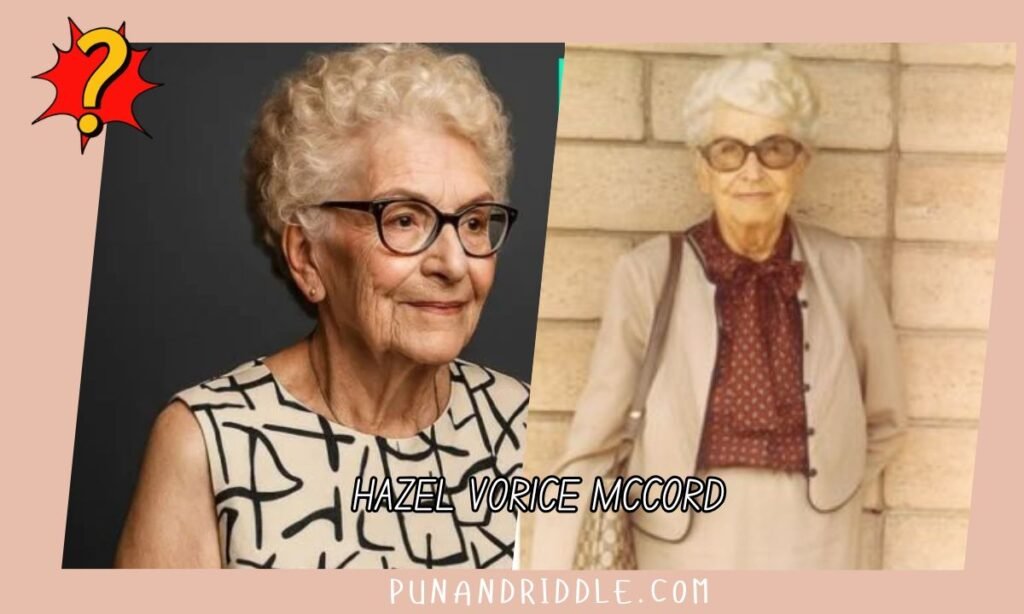
Two of America’s most beloved entertainers grew up in the same modest Illinois home, shaped by the same steady hand. Neither Dick Van Dyke nor Jerry Van Dyke ever forgot where their values came from. The woman behind both of them never once sought the spotlight, and that is exactly what made her remarkable.
| Detail | Information |
|---|---|
| Full Name | Hazel Vorice McCord (later Van Dyke) |
| Born | October 6, 1896, East Lynn, Vermilion County, Illinois |
| Died | September 27, 1992, Little Rock, Arkansas |
| Age at Death | 95 years old |
| Parents | Charles Cornelius McCord and Adeline Verinda Neal |
| Spouse | Loren Wayne “Cookie” Van Dyke (married June 1925) |
| Children | Richard Wayne “Dick” Van Dyke (b. 1925), Jerry McCord Van Dyke (b. 1931) |
| Profession | Stenographer and Homemaker |
| Ancestry | Mayflower descendant (Cooke and Hopkins lines) |
| Burial | Sunset Memorial Park, Danville, Illinois |
Early Life in East Lynn, Illinois
Hazel Vorice McCord was born on October 6, 1896, in East Lynn, a small village in Vermilion County, Illinois. She grew up surrounded by farming culture, community loyalty, and the kind of practical values that defined rural Midwestern life at the turn of the 20th century.
Roots in Rural America
A small town with big influence: East Lynn sat deep in the Illinois heartland, where neighbors knew each other by name and daily life revolved around shared work and shared faith. Growing up here meant learning self-reliance early and understanding that reputation was built through action, not words.
The world she was born into: In 1896, horse-drawn wagons still outnumbered automobiles, and electricity was still a novelty in most rural homes. Hazel’s earliest years were defined by simplicity and physical work, and those conditions built a foundation that no amount of later change could shake.
Childhood Lessons of Resilience
Resilience was not taught, it was lived: Growing up in a farming community meant that setbacks were a regular feature of life, from bad harvests to harsh winters. Children learned early how to adapt and keep going, and Hazel absorbed that lesson deeply. It stayed with her for nearly a century.
Community as a classroom: Rural Illinois in the late 1800s was a place where community gatherings, church events, and local schools did the work that formal institutions do today. Hazel’s character was shaped not just by her parents but by every neighbor, teacher, and community elder who passed through her early life.
Family Background and Ancestry
Hazel was the daughter of Charles Cornelius McCord and Adeline Verinda Neal, both rooted in the same Vermilion County world where she was raised. Her family lineage ran deep into American history, stretching back centuries before her birth.
Descendant of Mayflower Passengers
A lineage tied to American origins: Hazel was a descendant of Mayflower passengers through the Cooke and Hopkins family lines, connecting her directly to some of the earliest European settlers in American colonial history. That ancestry gave the Van Dyke family a thread reaching back more than 300 years into the American story.
History she carried quietly: Hazel never appears to have made much of this connection publicly. She wore it the way she wore everything else about herself, without fanfare. But knowing it adds depth to understanding who she was and where her sense of dignity and rootedness came from.
Influence of Parents Charles and Adeline
A father who modeled steadiness: Charles Cornelius McCord was 25 when Hazel was born, a young man raising a family in a demanding rural environment. The consistency he brought to that role gave Hazel her first model of what responsible, grounded parenting looked like in practice.
A mother who shaped her character: Adeline Verinda Neal was 23 at Hazel’s birth, and her influence on her daughter’s inner life was deep. The values Hazel later poured into her own sons, discipline, warmth, and moral clarity, almost certainly trace back to what she observed in her own mother’s daily example.
Career as a Professional Stenographer
Before devoting herself fully to family life, Hazel built a professional identity as a stenographer. In the early 1900s, this was a skilled and respected occupation requiring sharp focus, fast hands, and genuine intelligence.
Skills That Shaped Her Household
Precision carried into every room: Stenography demanded accuracy under pressure, the ability to capture information quickly and organize it clearly. Hazel brought that same precision to how she ran her home. Nothing about her domestic life was careless or improvised. It was managed with the same care she applied to professional work.
A rare professional identity for her time: Few women in rural Illinois in the early 1900s held skilled office positions. Hazel did, and that made her unusual. She developed a professional confidence and independence that quietly informed every decision she made as a wife and mother in the decades that followed.
Balancing Work and Homemaking
She did both before it had a name: Long before the phrase “work-life balance” entered the conversation, Hazel was living the reality of it. She held a professional role and managed a household without a support system or modern conveniences. That balance required constant prioritization and a clear sense of what mattered most.
Her professional years set an example: Whether her sons fully understood it or not, growing up watching their mother navigate both a career and a household gave Dick and Jerry a lived example of discipline, competence, and self-sufficiency. Those lessons do not come from lectures. They come from observation over years.
Marriage to Loren “Cookie” Van Dyke
Hazel married Loren Wayne Van Dyke in June 1925 in East Lynn, Illinois. Loren, known affectionately as “Cookie,” was a traveling salesman with an outgoing personality that balanced Hazel’s steady, grounded nature.
Building a Foundation of Love and Support
Opposites who complemented each other: Loren’s charm and willingness to take risks paired naturally with Hazel’s organizational steadiness and emotional consistency. Where he moved outward into the world through travel and salesmanship, she held everything together at home. That division worked because both parts were done well.
A fifty-year partnership: Their marriage lasted until Loren’s passing in 1975, spanning five decades of American history and enormous personal change. The fact that their union held through the Depression, two world wars, and the transformation of American domestic life says something about both of their characters.
Navigating Family Life During the 20th Century
Stability through instability: The 1930s were economically brutal for most American families. Hazel managed the household during the Depression years with the same measured competence she brought to everything else. Her family did not fall apart under pressure because she did not allow the emotional center to collapse.
Home as the constant: As Loren traveled for work, Hazel became the fixed point in her sons’ daily lives. In families where one parent is frequently absent, the present parent carries the full weight of daily formation. Hazel carried that weight without complaint, and the results spoke for themselves.
Raising Dick and Jerry Van Dyke
Hazel raised two sons who became household names in American entertainment. Richard Wayne “Dick” Van Dyke was born in 1925, and Jerry McCord Van Dyke followed in 1931. Both men credited their upbringing as foundational to their careers and their character.
Encouraging Creativity and Talent
She saw what was there before anyone else did: Hazel recognized early that both boys had natural gifts for performance, music, and comedy. Rather than steering them toward more conventional paths, she gave those gifts room to develop. She supported Dick’s involvement in church choir and local theater without pushing him toward outcomes she controlled.
Creative space at home: The Van Dyke home was a place where practicing routines, experimenting with humor, and developing performance instincts were treated as legitimate activities. That permission mattered enormously for two boys who would eventually build careers entirely on those instincts.
Instilling Values, Discipline, and Humor
Humor with a moral foundation: The Van Dyke brothers were known throughout their careers for a kind of comedy that was clean, warm, and rooted in genuine humanity. That is not accidental. It reflects what they were raised with. Hazel instilled a sense of humor that laughed with people rather than at them.
Discipline as the quiet rule: Neither Dick nor Jerry became the kind of Hollywood figure who burned out early or lost themselves in excess. Their consistency and professionalism across decades of work trace directly back to the household standards Hazel set when they were young.
Witnessing a Century of Change
Hazel was born into a world of horse-drawn transport and oil lamps. She died in 1992 in the era of cable television and the early internet. Few lives span a century of technological and social change as completely as hers did.
From Rural Life to Television Age
She watched her son become a TV icon: Dick Van Dyke’s fame peaked during the 1960s with “The Dick Van Dyke Show,” one of the most celebrated sitcoms in American television history. Hazel watched her son become a household name from the same grounded perspective she had always held. Fame around her did not change who she was.
A living bridge across eras: Hazel experienced the invention of radio, the arrival of commercial aviation, the moon landing, and the rise of home computing all within a single lifetime. She adapted to each shift without losing the values she had carried since childhood in East Lynn.
Adapting Through Wars, Depression, and Technology
History moved through her home: World War I, the Great Depression, World War II, and the civil rights movement all shaped the decades of her adult life. Hazel raised her family through the Depression and two global conflicts without the stability most modern parents take for granted. Her steadiness through those years was not passive. It was deliberate.
Change on the outside, constant on the inside: What made Hazel remarkable across nine decades was not that she transformed with the times but that she remained herself within them. Her values did not shift with cultural fashions. That consistency gave her sons a fixed point to return to no matter how far their careers took them.
Legacy and Lasting Impact
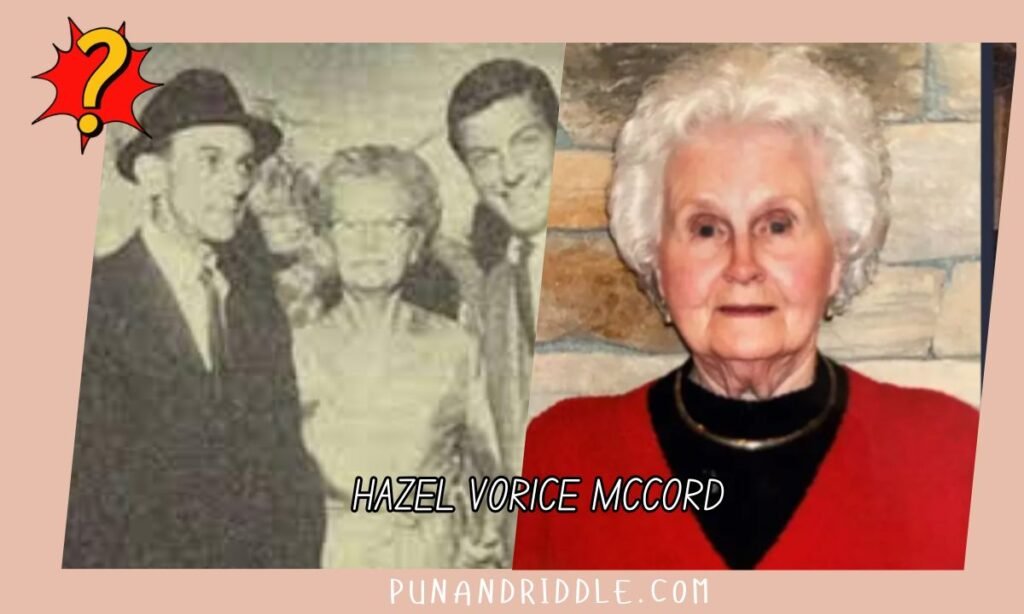
Hazel Vorice McCord never appeared on a television screen or accepted an award. Her legacy exists entirely in the people she shaped and the values she passed forward across generations.
Influence on Sons’ Careers
The foundation beneath the fame: Dick Van Dyke has spoken throughout his career about the importance of his upbringing in shaping his professional conduct. His warmth on screen, his commitment to clean humor, and his longevity in the industry all reflect what was built in his childhood home. Hazel built it.
Jerry carried the same roots: Jerry Van Dyke, best known for his role on “Coach,” shared the same grounded humility that defined his brother’s public image. Two sons from the same home, decades apart in their careers, reflecting the same core character. That is the clearest possible measure of a parent’s lasting influence.
Lessons in Family, Resilience, and Leadership
Leadership without authority: Hazel never held a title, ran an organization, or gave a speech. Her leadership was entirely relational. She shaped the people around her through daily example, consistent standards, and genuine care. That kind of leadership is harder to build than any institutional role and far more durable.
Resilience as a transferable gift: Every challenge Hazel navigated quietly, whether financial hardship, a traveling spouse, or the pressures of raising children during uncertain times, became part of what she transferred to her sons. Resilience is not taught in a single conversation. It is absorbed over years of watching someone refuse to give up.
Personal Traits and Strengths
Those who knew Hazel described her as steady, precise, warm, and sharp-witted well into her later years. She was known in some circles simply as “The Rock,” a nickname that captured her character more accurately than any formal description could.
Quiet Leadership and Emotional Intelligence
She led without demanding attention: Hazel’s emotional intelligence showed in how she managed a household where personalities, needs, and ambitions were always in motion. She read people accurately, responded calmly under pressure, and created an atmosphere where everyone around her felt both supported and expected to perform.
Consistency as a form of love: Children do not need perfection from their parents. They need consistency. Hazel provided it every day, across decades, without variation. That kind of emotional reliability is what allows children to take risks, because they always know where home is.
Homemaker Skills That Shaped a Dynasty
Management at the household level: Running a home through the Depression, raising two children, working as a stenographer, and maintaining the family’s emotional equilibrium while a husband traveled required genuine organizational skill. Hazel did all of it without calling it anything remarkable, which is perhaps the most remarkable thing about it.
Attention to detail in everything: The precision Hazel developed as a stenographer never left her. It showed in how she maintained the household, managed limited resources, and created an environment where standards mattered. Her sons grew up in a home where things were done properly, and they carried that expectation into their professional lives.
Lesser-Known Facts About Hazel Vorice McCord
Most people know Hazel only as the mother of Dick and Jerry Van Dyke. But several details about her life reveal a person of greater depth and historical connection than her public profile suggests.
Anecdotes That Reveal Her Character
She kept Dick grounded: Despite her son’s massive television fame in the 1960s, Hazel was known to remind him of the chores and responsibilities he had growing up in Illinois. Fame did not change how she saw him, which is precisely why it did not change how he saw himself.
Sharp until the end: Those who knew her in her final years described Hazel as an avid reader with a sharp wit that stayed intact well into her nineties. She was not simply a woman who lived long. She was a woman who stayed fully present throughout a long life, engaged, curious, and clear-eyed.
Connection to American History and Culture
A Mayflower lineage in a modest Midwest home: Hazel’s connection to the Cooke and Hopkins lines of the Mayflower passengers places her family among the earliest permanent European settlers in North America. That ancestry sat quietly in the background of a woman who raised her children in a modest Illinois home with no apparent interest in historical prestige.
Born into one century, died in another: Hazel was born nine years before the Wright Brothers’ first flight and died the same year that the World Wide Web opened to the public. Her life contained the entire arc of modern American technological history, and she navigated all of it from the same steady internal compass.
Final Years and Passing
Hazel spent her later years in the American South and eventually Arkansas, living close to family as her life wound toward its conclusion. She died on September 27, 1992, in Little Rock, Arkansas, just nine days before what would have been her 96th birthday.
Life in Arkansas and California
She followed the family, not the fame: In her later decades, Hazel relocated as family circumstances required, spending time in Arkansas while her sons’ careers flourished in Hollywood. Hazel never moved toward the spotlight.
She moved toward the people she loved, which was consistent with every other decision she made across her life. A quiet final chapter: There are no dramatic final acts in Hazel’s story.
She lived, she was present, she contributed, and she passed quietly at 95. Her burial at Sunset Memorial Park in Danville, Illinois, returned her to the Vermilion County soil where her story began, completing a remarkably full circle.
Honoring Her Role in Family History
Recognition came through her children’s lives: Hazel never received a public tribute or an industry award, but the clearest honor paid to her was the way Dick and Jerry Van Dyke conducted their careers and spoke about their upbringing.
Both men remained grounded, professional, and widely respected throughout long careers in a notoriously unstable industry. That is her award.
Family memory as the real record: Genealogical records, family histories, and the accounts of those who knew her preserve Hazel’s story in ways that public recognition never could.
She was buried among people who loved her, remembered by the community where she began, and honored by a family legacy that millions of Americans associate with warmth and integrity.
Frequently Asked Questions
Who was Hazel Vorice McCord?
She was the mother of Dick and Jerry Van Dyke, a stenographer, and the matriarch of one of America’s most recognized entertainment families.
What was her professional career?
She worked as a skilled stenographer before becoming a full-time homemaker after her marriage in 1925.
When and where was she born?
October 6, 1896, in East Lynn, Vermilion County, Illinois.
Who were her children?
Richard Wayne “Dick” Van Dyke, born 1925, and Jerry McCord Van Dyke, born 1931.
What is her ancestral significance?
She was a descendant of Mayflower passengers through the Cooke and Hopkins family lines.
How did she influence Dick and Jerry Van Dyke’s careers?
She created a home where creativity was encouraged, discipline was expected, and humility was modeled every day, forming the character both sons carried into their professional lives.
Final Words
Quiet leadership leaves the longest legacy: History tends to remember the loud and visible. Hazel was neither, and yet her influence runs through everything the Van Dyke family represented, the warmth, the integrity, the humor that never punched down.
Hazel Vorice McCord was born in a small Illinois village, worked a skilled profession, raised two icons, survived a century of upheaval, and died having shaped far more of American culture than any headline ever acknowledged.

Shoaib is a creative writer who loves clever wordplay and brain teasers, sharing fun puns and riddles that spark laughter, curiosity, and smart thinking for readers worldwide.